Report | Intelligent Investment
Asia Pacific Real Estate Market Outlook 2026
Recalibrate and Innovate
January 29, 2026 15 Minute Read

Executive Summary
Looking for a PDF of this content?
Explore our APAC Online Data Dashboard

2026 Asia Pacific Real Estate Investment Market Outlook Event Recording
The Asia Pacific commercial real estate market is poised for another solid year in 2026, with both investment and leasing activity forecasted to strengthen, backed by the region's resilient economy.
Despite the bright outlook, there remain headwinds, with trade related volatility and geopolitical tension among the challenges set to exert a strong influence over real estate decision-making in the coming year.
The real estate landscape is shifting, especially in the office sector where prospects are brightening, and in the logistics sector, where performance is cooling after a prolonged period of robust growth. Across all sectors, medium-term supply is projected to contract, marking a significant shift from the current oversupply situation. These changes to market fundamentals will exert a strong bearing on investors' allocations to individual sectors, while more limited room for yield compression will compel property owners to place a stronger focus on income growth potential.
Against this backdrop, occupiers and investors must reassess current strategies, portfolios and requirements, while embracing new sectors, technologies and approaches, leading us to adopt the theme of "Recalibrate & Innovate" for this year's report.
- On the economic front, Asia Pacific GDP growth is forecasted to slow to 3.9% in 2026 from the relatively robust 4.3% in 2025, driven by softer growth in mainland China, India and Japan. With interest rates in most Asia Pacific markets continuing to decline in 2025, the rate cutting cycle is forecasted to slow further or finally come to an end this year.
- Investment is set to increase this year as net buying intentions continue to rise. With office leasing activity in many CBDs picking up, CBRE expects investor appetite for offices to strengthen significantly this year. Limited yield compression will shift investors' focus towards rental growth as a driver of returns.
- Office leasing demand is forecasted to strengthen in 2026 as occupiers' strong desire to be in core locations with high-quality buildings drives activity in mature markets. Expansionary demand will be seen from tech firms, wealth management and professional services companies. Supply is expected to peak while rents will remain on an upward track in most markets.
- While most logistics markets will still see rising rents, momentum will slow as occupiers turn more selective towards expansion amid softer regional economic growth. New stock is set to fall sharply from 2027 as developers adjust to slower rental growth. 3PLs and e-commerce operators will remain key drivers of demand, with automation-ready warehouses keenly sought after.
- With sales picking up and clarity around trade policy improving, retail leasing activity in most markets is expected to strengthen from 2025. Fashion & apparel along with sports & athleisure will drive demand. Rents are expected to sustain steady upward momentum across most markets, supported by tight vacancy in prime locations and limited future supply.
- In the hotel sector, tourism arrivals are close to recovering to pre-pandemic levels, meaning that growth this year is expected to slow from last year. Event-driven tourism will remain a key growth driver in 2026. While RevPAR growth across most markets should continue, the rate of growth will be more limited as ADRs continue to normalise.
Economy
Recalibrate
- Prepare for slower economic growth: GDP growth in Asia Pacific is expected to slow in 2026 after a year in which the region’s economy displayed resilience amid tariff volatility and global economic uncertainty. India, mainland China and Southeast Asia are forecasted to exhibit the fastest growth in the region although the rate of GDP expansion will be slower compared to 2025. Markets with stronger growth this year will include Korea and the Pacific as fiscal and monetary measures, alongside improved domestic sentiment, stimulate economic expansion.
- Make ready for the end of the interest rate cut cycle: With interest rates in most Asia Pacific markets continuing to fall in 2025, the rate cutting cycle is forecasted to slow further or finally come to an end in 2026. Exceptions include Japan, where the rate hiking cycle is expected to continue, and Australia, where interest rates could rise once more amid mounting inflationary pressure.
Innovate
- Look to AI boom to cushion trade headwinds: The AI economy should help drive demand for semiconductors and other advanced high-tech manufacturing outputs in 2026, especially in Taiwan, Korea and Japan. This will help offset trade weakness in other sectors, especially as semiconductors generally remain exempt from U.S. tariffs. Mainland China continues to invest heavily in AI although the country is subject to restrictions on semiconductor imports.
- Monitor new policies and urban planning schemes: With 2026 marking the start of mainland China's latest five-year plan, the central government will unveil a series of new policies to support growth. In India, regulatory changes to enable Small and Medium Real Estate Investment Trusts (SM REITs) will provide investors with a new channel to allocate capital. Progress will continue on several major urban development schemes, including Western Sydney International Airport (due to open mid-2026), Hong Kong SAR's Northern Metropolis, and Singapore’s 2025 Master Plan.

Capital Markets
Recalibrate
- Time to target offices: Respondents to CBRE's 2026 Asia Pacific Investor Intentions Survey named offices as their top sector for investment for the first time since 2020 as interest continues to gradually shift away from industrial & logistics. Positive market fundamentals and fading uncertainty around interest rate movements will ensure core-plus and value-add strategies dominate investor preferences in 2026.
- Focus on income growth as a driver of returns: Limited yield compression will shift investors' focus towards rental growth as a driver of returns; a trend that bodes well for investment in the Tokyo and Sydney office markets. Forecasted yield compression in Sydney and Brisbane – both of which lagged in 2025 - may also help boost returns. Yields in Greater China may see their multi-year expansion cycle end in 2026.
Innovate
- Consider data centres: Investment in data centres will gain further momentum in 2026, with respondents to CBRE's 2026 Asia Pacific Investor Intentions Survey ranking it as the fourth most preferred sector. While the number of mature data centre markets in Asia Pacific remains limited, investors continue to explore a multitude of investment avenues including M&A and joint ventures to build scale in this rapidly expanding sector.

Office
Recalibrate
- Reassess space requirements: Multinationals implementing stricter office attendance mandates may need to add to their footprint after cutting space at the height of the pandemic. Occupiers' strong desire to be in core locations with high-quality buildings will drive leasing demand in mature markets. Expansionary demand will be seen from tech firms, wealth management and professional services companies.
- Expect limited supply in developed markets: Regional office supply is forecasted to peak this year, with mainland China and India set to account for the bulk of new stock. Supply in developed markets is expected to contract further as high construction costs deter new office development. Vacancy in Tokyo, Korea and Singapore will remain low, while availability in Australia and Hong Kong SAR will tighten.
Innovate
- Pursue asset enhancement amid heightened competition: With occupiers continuing to display a strong preference for well managed buildings with a strong amenity offering, property owners must focus on asset enhancement initiatives through experience-led design and digital enhancements to remain competitive.
- Carefully conduct space planning: Forecasting office space requirements is becoming increasingly complex as businesses consider the impact of stricter return to office mandates; the adoption of AI in workplaces; and more fluid business planning as global geopolitical tensions persist. These dynamics will continue to reshape workplace strategies, requiring occupiers to implement greater flexibility and scenario-based planning to align with rapidly changing market conditions.

Industrial & Logistics
Recalibrate
- Capitalise on moderating rental growth: While most markets will still see rising logistics rents, upward momentum will slow as occupiers implement more selective expansion strategies amid softer regional economic growth. Tenants will prioritise renewals and consolidation to prime assets near city centres rather than aggressively extending their footprint. Incentives and landlord flexibility will remain prevalent in supply-laden markets.
- Prepare for the end of the supply glut: Following a strong wave of completions between 2023 to 2026, new stock is set to fall sharply from 2027 onwards as developers adjust to slower rental growth. The surge in construction and land costs, coupled with elevated financing expenses, will curb new development in Australia, Korea, and India. While short-term supply pressure will persist over the next 24 months, particularly in mainland China, the medium to longer-term outlook points to tightening availability, which could restore landlord confidence and underpin a rental recovery.
Innovate
- Seek automation-ready warehouses: The pursuit of greater operational efficiency and cost control by 3PLs and e-commerce operators will generate strong demand for modern, automation-ready logistics facilities with large floorplates. Beyond robotics integration and automation, occupiers are advised to leverage real time data and smart systems to accurately identify optimal warehouse locations to meet rising delivery expectations.
- Strengthen supply chains amid trade uncertainty: Adoption of supply chain diversification and nearshoring strategies will accelerate as enterprises seek to reduce operational vulnerabilities by mitigating tariff uncertainty and geopolitical risk. Emerging markets in India and Southeast Asia stand to benefit by offering skilled labour, lower costs and logistics infrastructure upgrades.

Retail
Recalibrate
- Locate stores in prime areas: Instead of opening multiple stores, retailers are focusing on relocating or upgrading existing stores to prime locations as such areas provide more visibility and opportunities to channel sales to either physical or online platforms.
- Act quickly and decisively: Limited availability in prime locations will intensify competition for space, while high rents and landlords’ strong negotiation power will influence retailers’ decision making. Retailers must move fast when opportunities arise or pre-commit to upcoming projects to secure their desired space.
Innovate
- Reshuffle tenant mix to stay relevant: Consumer spending patterns have shifted since the pandemic, leading to a stronger emphasis on experiences over physical goods. Landlords are advised to rethink their offering by expanding allocations to dining and outdoor space; refreshing their tenant mix; and incorporating entertainment areas. These initiatives can enhance engagement; encourage longer dwell time; and ultimately increase overall spending.
- Augment experiential offerings: Retail trades that focus on physical goods, such as fashion, sports, and luxury, continue to integrate experiential elements into their retail spaces. This has led such retailers to prioritise flagship stores as platforms to showcase product features and brand heritage. In addition, some luxury brands have introduced F&B to stores within their portfolios to enhance customer experience and strengthen brand visibility.

Hotels
Recalibrate
- Prepare for a post-pandemic tourism recovery plateau: With tourism arrivals close to recovering to pre-pandemic levels in 2025, growth in 2026 is expected to slow y-o-y. While mainland Chinese outbound travel is yet to fully rebound, weak domestic demand and economic concerns may see a full recovery pushed back to 2026 and beyond.
- Convert hotels to living spaces: As the living sector gains traction, investors should explore conversion opportunities in markets where demand for living assets is high. Approaches include converting hotels into co-living and student accommodation, especially in Hong Kong SAR and Australia.
Innovate
- Adapt to event-driven tourism trends: With growth in tourist arrivals in many Asia Pacific markets set to be increasingly driven by events and concerts, hotel owners and operators must capitalise on this trend by utilising strategies such as real-time pricing to respond quickly to shifts in demand during events or peak times. This flexibility can help them make the most of high-demand periods even if overall occupancy is low.
- Consider soft brands amid elevated construction costs: High construction costs mean hotel owners looking to convert or rebrand in 2026 should further consider soft brands in order to keep conversion costs low. Soft brands can provide hotel owners with greater independence on brand requirements while enjoying access to core-brands’ membership and booking platforms.

Event Recording
Asia Pacific Real Estate Market Data Dashboard
Explore dynamic real estate data across all sectors
Use the Dashboard Data Subscription Service

Regional Market Outlook Insights

2026 Singapore Real Estate Market Outlook report offers forward‑looking insights into key property sectors, emerging investment themes, and economic trends shaping the year ahead.

This year’s report focuses on the growth potential and opportunities expected to emerge in China’s real estate market during the 15th Five-Year Plan period.

CBRE’s Pacific Market Outlook Report provides insights into commercial real estate in Australia and New Zealand, including trends, opportunities, and challenges.

The Japanese economy is expected to see moderate growth through 2026.

In 2026, Korea’s economy is expected to reach a turning point as interest rate cuts coincide with a cyclical recovery following a prolonged period of high rates and elevated inflation.
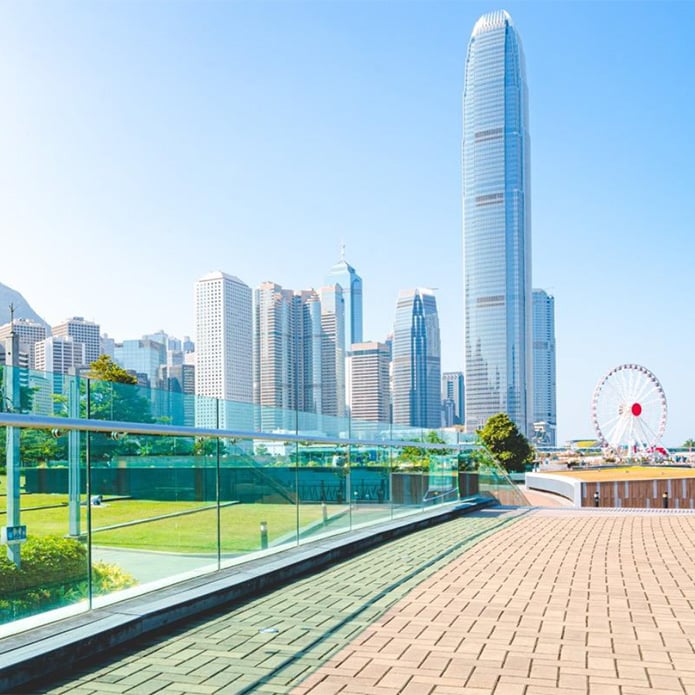
The potential for further interest rate cuts, along with the stabilisation of residential property prices and a strong pipeline of upcoming IPOs, is expected to enhance the wealth effect, stimulating growth in private consumption, property investment, and the expansion of corporate real estate portfolios in 2026.

Momentum is building: investor confidence is lifting, supply pipelines are moderating, and rental growth is returning. See where the opportunities lie in New Zealand’s 2026 Market Outlook

Retail: Total retail supply reached 8.25 million square meters in 2025, with an additional 0.3 million square meters slated for completion in 2026.

Economy & Policy: Taiwan’s GDP is projected to expand by 7.71% y-o-y in 2026 on the back of the strong development of AI technology. The Central Bank will likely hold policy rates steady, while the Middle East conflict may push up inflation.
Research Contacts


Business Contacts
Greg Hyland
Head of Capital Markets, Asia Pacific

Richard Stevenson
Managing Director, Head of Office Leasing, Advisory Services, Asia Pacific

Vivek Kaul
Managing Director, Head of Retail Leasing, Advisory Services, Asia

Michael Bowens
Managing Director, Head of Industrial & Logistics Leasing, Advisory Services, Asia Pacific


Related Insights

CBRE forecasts that annual U.S. GDP growth will slow to 2.0% in 2026 with softening labor market conditions and marginally lower inflation averaging 2.5%.

The UK is embarking on 2026 with cautious optimism. From a macroeconomic perspective, several metrics are set to improve, and activity in late 2025, including the UK Autumn Budget announcement, has brought greater certainty to begin the new year. That said, we expect marginally slower growth in 2026 relative to 2025.

As we enter the year, the real estate market is now firmly into the next cycle. However, we expect differences in this cycle when compared to previous ones.