Chapter 3
Real Estate Strategies
New Zealand Office Occupier Sentiment Survey 2026
The waiting game is ending
For years, many occupiers delayed major real estate decisions while attendance patterns and workplace strategies continued to evolve. That period of uncertainty is beginning to fade. Organisations are increasingly reassessing what they need from their workplace, with quality, amenity and growth ambitions influencing the next generation of real estate decisions.Drawing on responses from 67 organisations representing more than 22,000 employees across New Zealand, this section explores the factors shaping occupier priorities, relocation decisions and future space requirements.
What matters most when choosing a workplace?
Functionality and location still lead occupier priorities, but amenity considerations are catching up
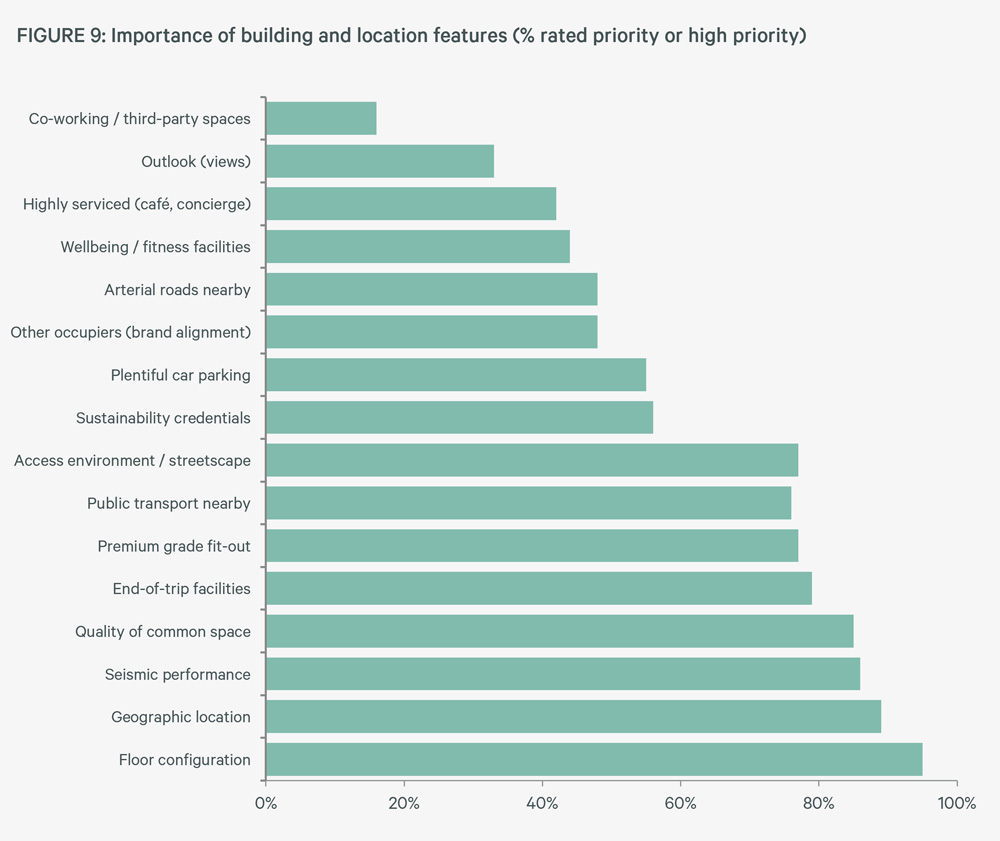
When occupiers assess a building, the practical leads. Floor configuration is the highest priority feature, with 95% of respondents rating it as a priority or high priority. Geographic location. seismic performance, and quality of common spaces round out the top four.The next level includes end-of-trip facilities and a premium-grade fit-out, both of which rank higher than in previous years, reaffirming that higher quality and amenity are increasingly important differentiating factors amongst buildings competing for occupiers.
Sustainability credentials rank 12th of 16 features, consistent with previous years: sustainability matters, but the fundamentals of space and location matter more. Co-working and third-party spaces sit at the bottom of the list at 16%, reinforcing that flex is a targeted solution rather than a mainstream requirement, at least for the larger occupiers that comprised most of the survey respondents.
Wellbeing amenities are fit-for-purpose today, but the bar is rising
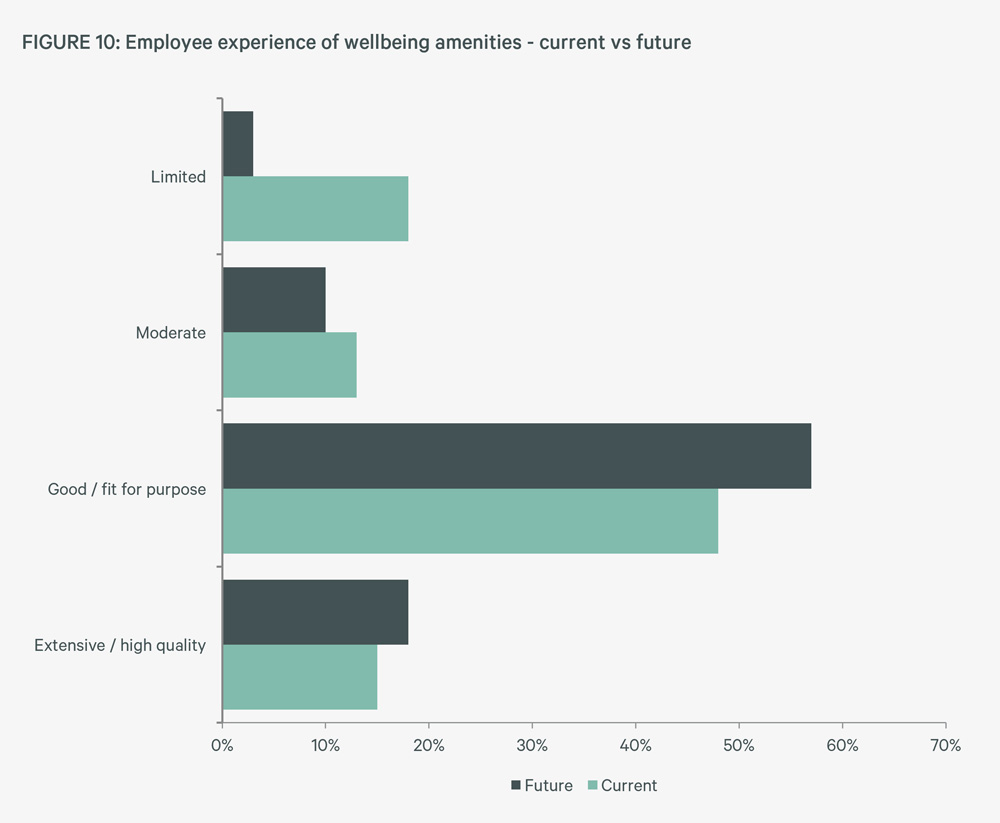
This is the first year the survey has asked about employee experience and wellbeing amenities, spanning end-of-trip facilities, fitness spaces and provisions for mental and physical wellbeing. The picture is one of adequacy today with rising expectations tomorrow.
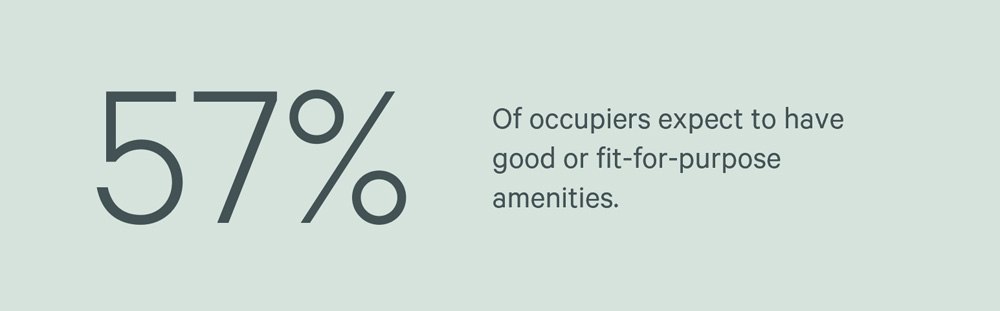
48% of occupiers rate their current amenities as good or fit for purpose, and 15% describe them as extensive or high quality. 18% rate provision as limited, and just 1% say amenities are not required.
Looking forward, 57% expect to have good or fit-for-purpose amenities, and 18% expect extensive or high-quality provision. The portion reporting limited provision falls sharply. The direction is a lift in the base quality of amenity offerings, with fewer occupiers content to operate at the lower end of the scale. For landlords and developers, this shows that end-of-trip and wellbeing provision is moving towards a baseline expectation.
Continue Reading the Full Report
Thank You
Related Services

Unlock the power of your workplace with services that build resilience, attract and retain talent, and increase employee connection and collaboration for your business.

Our licensed real estate agents provide complete property solutions for landlords and tenants, delivering tailored, comprehensive marketing and leasing strategies for office, industrial and retail properties.

As dedicated tenant advisors, we navigate the complexities of occupying premises together, developing market leading real estate strategies in line with your business.

Related Insights
-
Report | Intelligent Investment
Pacific Real Estate Market Outlook - April 2026 edition

CBRE’s 2026 Pacific Market Outlook highlights key trends and overarching themes that will guide market shifts and decision making.
-
Report | Intelligent Investment
2026 Asia Pacific Investor Intentions Survey

CBRE’s 2026 Asia Pacific Investor Intentions Survey uncovered a further improvement in buying intentions across most markets in Asia Pacific this year
-
The latest New Zealand Property Occupancy Costs and Rental Affordability report examines occupancy cost ratios and their implications for investors and occupiers. Read now.
-
Book | Adaptive Spaces
New Zealand Office Occupier Sentiment Survey 2025

Discover key insights into hybrid working, workplace trends, and real estate strategies shaping New Zealand’s office market in 2025. Explore data-driven guidance for occupiers and landlords on office attendance, space utilisation, and sustainable workplace solutions.
-
Viewpoint | Creating Resilience
The Sustainability Gap

Discover how the gap between the sustainability goals of major occupiers and the environmental performance of the buildings they occupy presents a significant opportunity for landlords and developers.
-
Brief | Intelligent Investment
New Zealand Yield Update October 2025
In Q3, market yields experienced notable firming, the most significant since Q2 2021, as lower interest rates enhanced liquidity and pricing for assets.
Contact Us
Kirstin Cooper
Associate Director, Workplace Consulting, New Zealand

Campbell Pritchard
National Director, Leasing - Office, New Zealand

