Adaptive Spaces
Making Places That Matter
By: Mary Ann Tighe, Chief Executive Officer, New York Tri-State Region, CBRE
May 21, 2026 5 Minute Read
Art belongs at the center of our cities and the built environment.
Our Take Newsletter
Our Take is CBRE’s monthly newsletter, delivering unique insights into today’s most pressing topics.
Learn More
I didn’t come to real estate the usual way. I came to it through art.
Before I ever negotiated a lease or walked a construction site, I studied, taught and wrote about art history. I was deputy chairman of the National Endowment for the Arts and arts advisor to Vice President Walter Mondale. While at the American Broadcasting Companies, I launched the A&E cable channel. In fact, it was on a trip to Venice for A&E where I met a commercial real estate broker who introduced me to the business.
I believed—deeply—that art was essential to who we are, how we understand one another and how we give meaning to the spaces we inhabit. And I still do.
So when people ask me why art matters in real estate—why it belongs in our buildings, our plazas, our lobbies and our public spaces—I don’t start with economics or branding or ROI, although art impacts all of them.
Rather, I start with people.
Real estate is often discussed in terms of square footage, tenant demand and financial performance. And, of course, those are fundamental. But buildings don’t exist on spreadsheets. They exist in cities and in neighborhoods. They exist in the daily lives of the people who pass through them, work in them and gather around them.
Buildings are not just assets. They’re experiences.
Art helps to turn a building into a place. It’s what makes someone stop instead of rush. It’s what gives us emotional connection to a place—inviting curiosity instead of indifference.
It’s what gives memory to spaces.
Last summer, 200 Park Avenue, CBRE’s New York headquarters, launched a partnership with auction house Christie’s to feature art in the building’s lobby, including iconic pieces from Andy Warhol and Alex Katz. The effect was immediate: Where tenants and visitors would typically race through to get to their elevator bank, there was a measured pause—a lingering to appreciate the space.
At 550 Madison Avenue, the Olayan Group’s triumphant, award-winning repositioning of that iconic tower prominently incorporates a thoughtful art program featuring works from more than a dozen women artists from around the world. Among these is Alicja Kwade’s Solid Sky, suspended within the property’s soaring lobby.
When art is integrated thoughtfully, it humanizes the built environment. It reminds us that buildings and neighborhoods are made not just for efficiency, but for connection. And the data supports this. In a survey conducted by Gensler, 85% of respondents reported that their main intention in visiting public spaces is to engage with others.
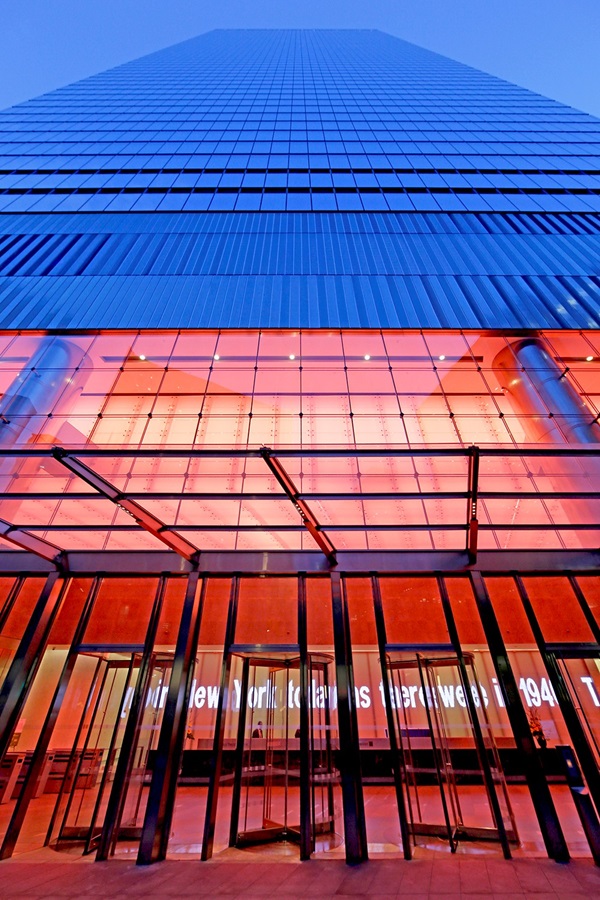
Larry Silverstein, my customer on so many consequential projects over the years, has spoken about the power of art in the built environment.
When building the original 7 World Trade Center, he’d adorned the building in red granite—from the façade to the entrance, lobby, ceilings and floor. The stone set the building apart from the aluminum-clad towers. Larry loved the stone, but he felt it made the building feel stark.
Larry asked his wife Klara to weigh in. Her solution? Art.
The couple toured the city’s contemporary art museums and, one by one, acquired significant works that could fill the iconic building’s expansive walls. As Larry recalls, it was a “total triumph.” And he’s carried that insight forward with his other projects since.
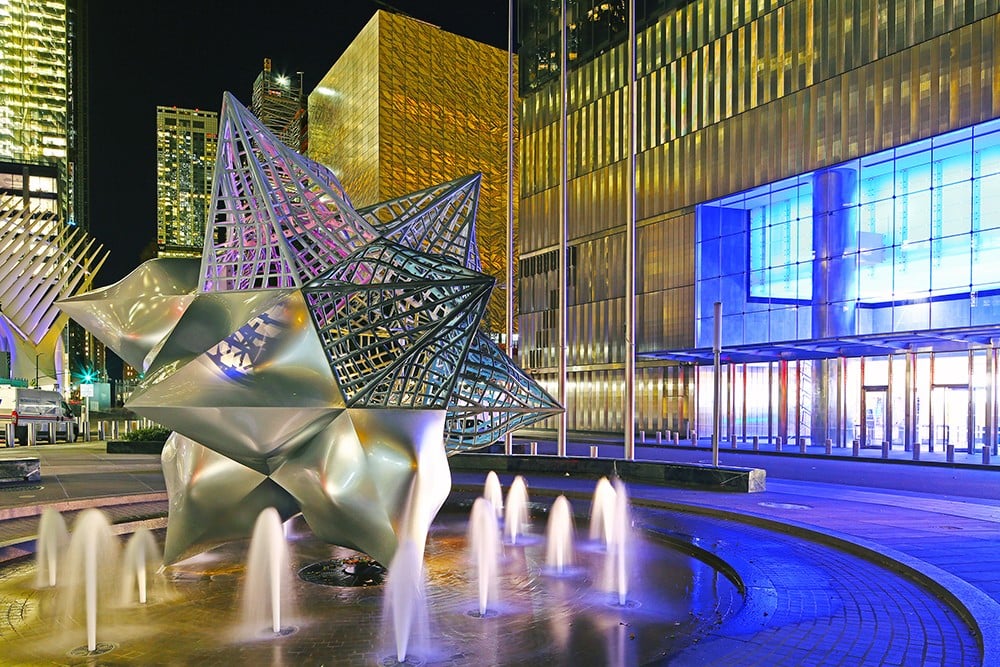
In fact, one of my favorite pieces of art at the World Trade Center today—if it’s possible to choose just one—is the late Frank Gehry’s Untitled (Fish on Fire, Greenwich Street), unveiled in the lobby at 3 World Trade Center early last year.
Larry commissioned the 20-foot by 7-foot suspended copper sculpture after seeing Gehry’s Fish Lamps at the Gagosian gallery—and what resulted was a remarkable collaboration between two men in their 90s, each a giant in his field.
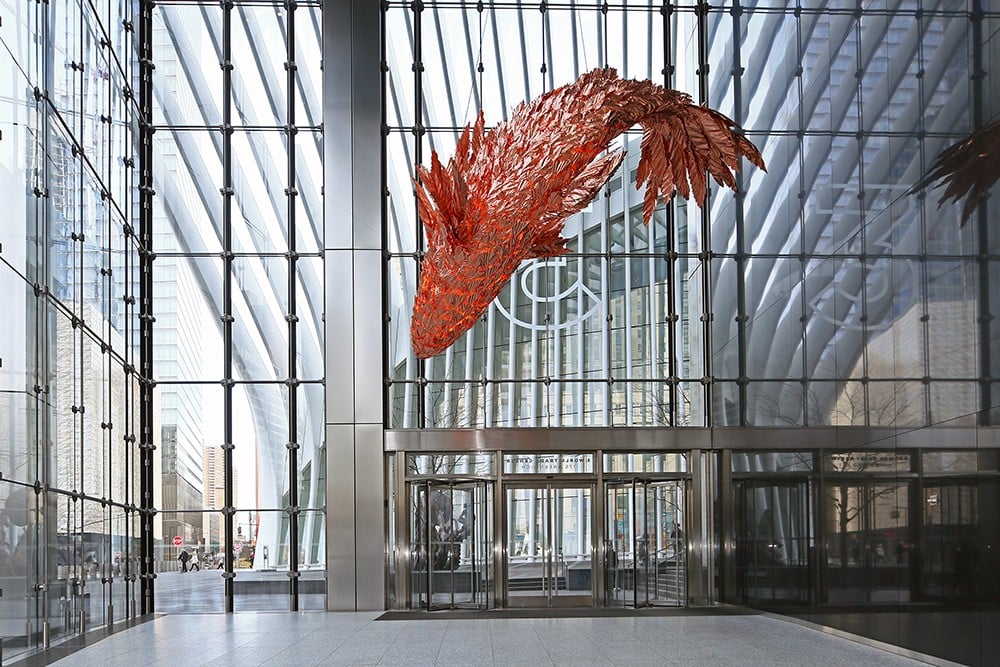
By the way, Larry didn’t need this monumental art to attract tenants to the property. The building was full by the time the piece was installed. Rather, Larry understood that it would enhance the experience of being in the building.
Art signals values.
Every building makes a statement. And when a developer invests in art, they are saying something beyond aesthetics. They are saying: We care about this place. We care about the people who use it. We care about contributing something meaningful to the public realm.
Renowned architect Harry Cobb argued that a building must be a “good citizen” of its city. He was right. And part of being a good citizen is not just about giving shelter. It’s about giving meaning and connection.
That matters—especially today.
Of course, few know this better than Larry.
Since 2019, Silver Art has supported emerging and mid-career artists through its residency program—offering free, year-long studio spaces on a dedicated vacant floor at the World Trade Center. The nonprofit, supported by Silverstein Properties, accepts 25 to 30 artists each year.
This intersection of real estate and art has given these artists an opportunity to do something they couldn’t have done otherwise—and is nothing short of an investment in the creativity and future of New York City.
Similarly, the Durst family does this with vacant retail and office space through Chashama, giving artists free space to present their works. The organization also subsidizes studio spaces and provides free community art classes.
One of the most powerful things about art in public spaces is that it belongs to everyone.
A sculpture in a plaza. A mural on a wall. An installation in a transit-adjacent space. These aren’t private luxuries. They are shared experiences.
Developers sometimes ask whether art pays off.
Spaces with placemaking initiatives—including public art installations—see a 50% increase in dwell time, a 63% increase in positive sentiment, and a 77% increase in the likelihood people will recommend the space to others.
These findings help to answer the economic question. But, as a lifelong student of art, I think it’s the wrong one to ask.
The better question is: What does this place want to be?
When art is integrated early—aligned with architecture, landscape and programming—it becomes part of the project’s identity. And identity increases long-term value.
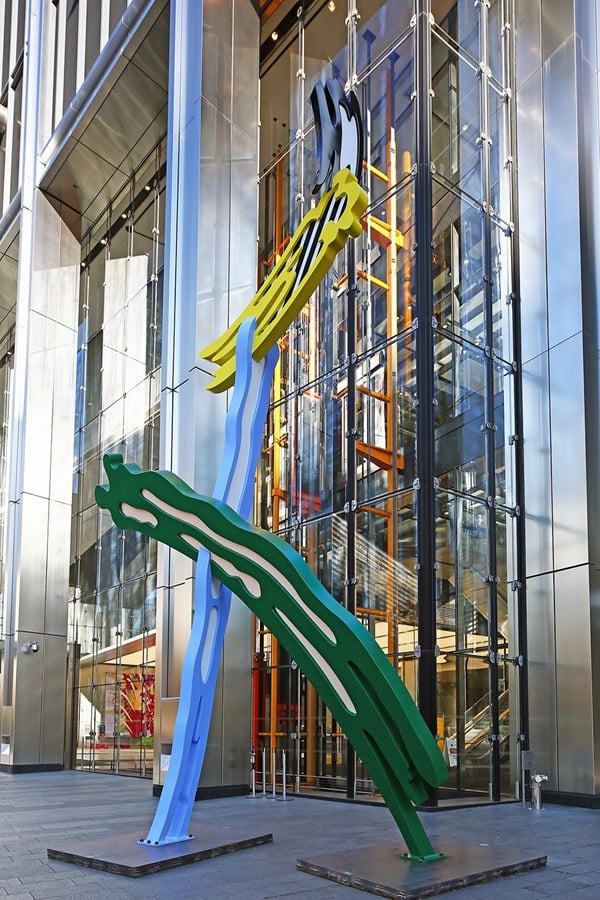
As our cities evolve—through new patterns of work, expectations of public spaces, and the changing needs of residents—I believe art will become even more central to real estate, not less.
Because at its core, this is not about art being incidental to real estate. It’s about making places that matter.
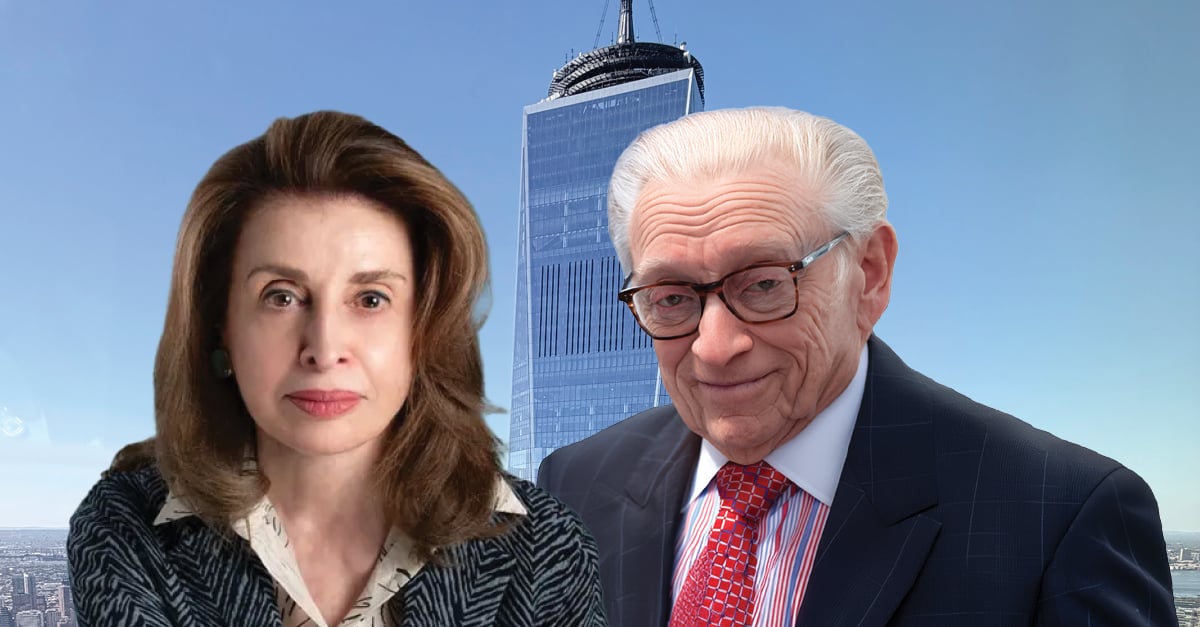
The Rising: Larry Silverstein and Mary Ann Tighe on the World Trade Center’s Rebirth
Two titans of New York real estate—Larry Silverstein and CBRE's Mary Ann Tighe—reveal the vision and partnerships behind the rebuilding of the World Trade Center and Downtown Manhattan’s transformation into a vibrant 24/7 community.
Contact
Mary Ann Tighe
Officer, Chief Executive

Related Insights
-
Podcast | Intelligent Investment
On Top of The World: Mary Ann Tighe on the future of real estate in New York City
December 3, 2024

Mary Ann Tighe, CEO of CBRE's New York Tri-State Region, discusses Manhattan's ongoing transformation. Drawing on decades of commercial real estate deal-making experience, Mary Ann discusses the resurgent office leasing market, office-to-residential conversions and long-term opportunities.
-
Podcast | Future Cities
Give My Regards: The Shubert Organization and Mary Ann Tighe on Broadway's Return
November 8, 2022

As the curtain rises on a new Broadway season, The Shubert Organization’s Julio Peterson and CBRE’s Mary Ann Tighe join Spencer Levy to discuss the Times Square theater district’s central role in another New York City comeback.